Project Pixel Orbital logo
Project Pixel Orbital
PixelSat I

A CubeSat built by high schoolers on Earth.

Project Pixel Orbital is a fully student-led team at Stanford Online High School building PixelSat I, a 3U CubeSat targeting launch into sun-synchronous low Earth orbit in early 2027, from scratch, on an extremely limited budget.

March 2027
current launch target
$10k
hardware budget
0
adult supervision
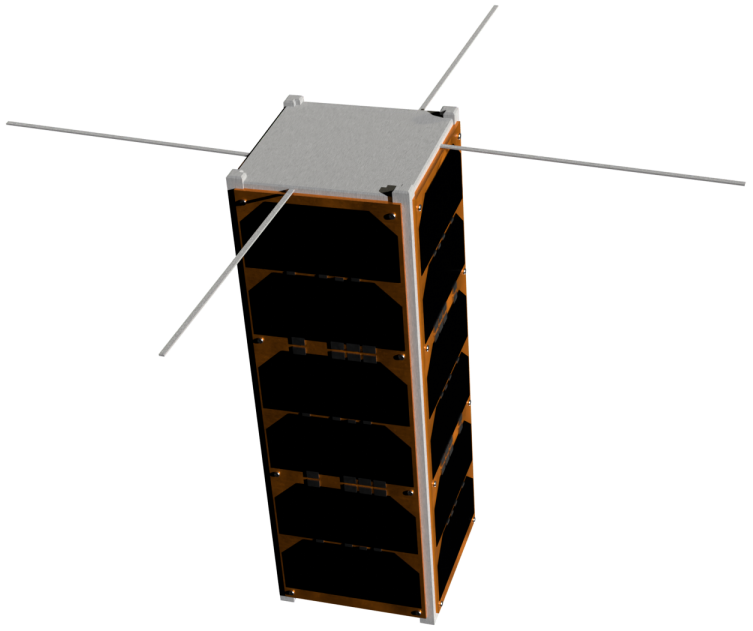
Transparent CAD render of PixelSat I

In brief

Form factor
3U CubeSat (100×100×300 mm)
Orbit
Sun-synchronous LEO @ 550km
Structure
Aluminum frame
Comms
UHF LoRa on 435 MHz
Goal
Capture & downlink image of the Earth

Mission

Do it

Getting to orbit is genuinely difficult; even university teams with decades of experience can fail. Due to our extremely limited budget, we're building everything from scratch and relying on commercial off-the-shelf hardware in the majority of cases. The chances of failure are high, which makes the mission all the more exhilarating.


Take an image of the Earth

We aim to 1) detumble (stop spinning after being released from the launch vehicle), 2) establish contact with the Project Pixel Orbital team on ground with our LoRa UHF comms pipeline, 3) capture an image of the Earth using the onboard OV2640 camera, and 4) downlink the image.

Learn stuff

Building PixelSat I is a massive endeavour, not just technically, but also because every member is learning and growing as we go. From embedded Rust to CAD software to control theory, we're pushing our knowledge and gaining new skills along the way.

Inspire other kids

We want to prove to students around the world that it's possible to build a CubeSat from scratch with no prior experience on a meager budget as a high school team, and hopefully get others to follow suit!

Technical overview

ADCS

IMU, magnetometer, and sun sensor readings are merged and fused using an Extended Kalman Filter to estimate the spacecraft's attitude (orientation). Hand-wound magnetorquers are driven through a PID controller to set the satellite's angular velocity and orientation.

Flight computer

A STM32-series processor running the RTIC framework handles all onboard operations on a single core. All code is no_std Rust.

Communications

We use the 435 Megahertz ultra-high frequency band for communication, with the LoRa modulation scheme. Our transceiver is an E-Byte LoRa module which wraps a SemTech SX1262-based chip, connected to a tape measure antenna which is deployed via a burn wire into orbit.

Power

Our battery pack is a 4P3S 21700 (21mm x 70mm) lithium ion battery pack powered by high-efficiency solar panels. The satellite runs on a 5V bus regulated by a custom power controller. A dedicated watchdog chip resets the STM32 flight computer in case of a heartbeat failure.

Team

Weston Yoo

Weston Yoo

Overall team lead

Ashwin Naren

Ashwin Naren

Software BDFL/Lead · electrical · structural

Aadish Verma

Aadish Verma

Comms lead · software

Vinayak Vikram

Vinayak Vikram

Electrical lead · software · structural

Victoria McLeod

Victoria McLeod

Structural Lead

Grace Zheng

Grace Zheng

Structural · media

DF

Daphne F

Outreach lead

NM

Nathan Muruganantham · ADCS

Electrical

SS

Shiv Sareen

Outreach · funding

Support us

Launch costs are covered, but we're seeking funding for the actual hardware of the satellite. Our $10,000 budget is already measly compared to the millions available to many university teams, so every dollar helps.